AVAYA DOCUMENTATION CENTER
Find answers to your technical questions and learn how to use our products
Avaya Session Border Controller Overview and Specification
REFER Handling
When REFER handling is enabled, Avaya SBC translates the incoming SIP REFER request to a SIP INVITE request. REFER message comes from enterprise, such as Communication Manager, or IVR and Avaya SBC handles that REFER going towards trunk server based on the trunk server interworking profile configuration. Following are three use cases for REFER handling.
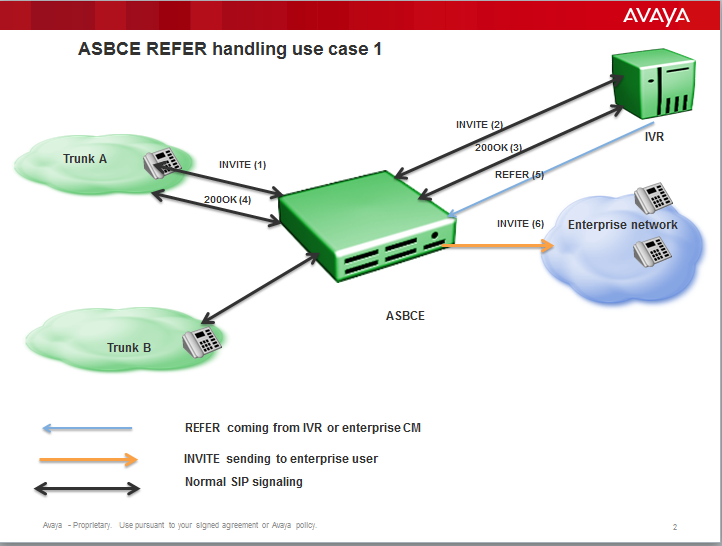
Use case 1
Avaya SBC uses REFER message and sends a routing INVITE towards enterprise user.
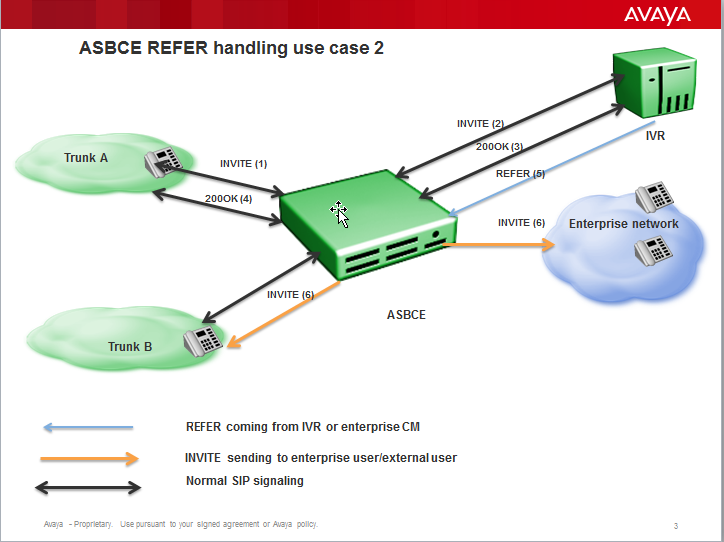
Use case 2
Avaya SBC uses the REFER message to send an INVITE towards trunk user or enterprise user based on routing profiles created to route the new INVITE. INVITE created from REFER is routed using URI based routing. Routing entries must be created in the trunk server routing profile to route the request to external trunk. By default, the request is routed back to enterprise server. In Aura® AST2 transfer mode, Avaya SBC should always route the new INVITE towards the enterprise server as Avaya SBC cannot find the dialog to replace.
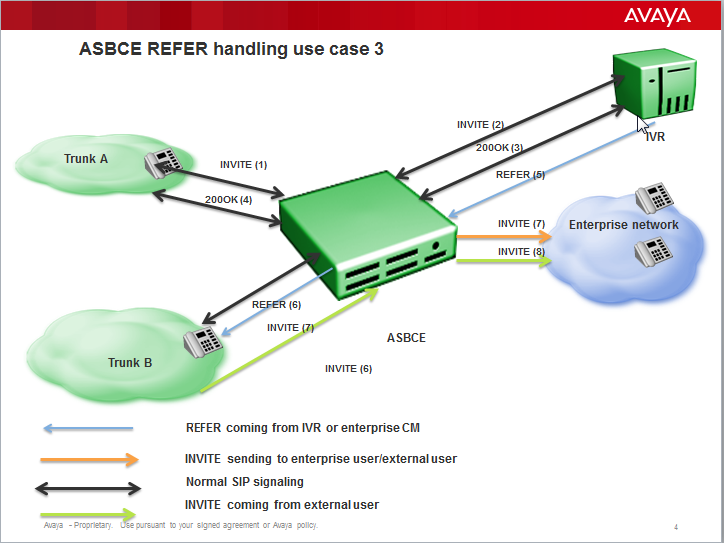
Use case 3
Based on URI group configuration under refer handling configuration, Avaya SBC uses some REFER messages. Depending on URI group configuration, REFER messages are relayed to the external trunk. External trunks generate new INVITE message for the target users.