AVAYA DOCUMENTATION CENTER
Find answers to your technical questions and learn how to use our products
Avaya Session Border Controller Overview and Specification
SIP trunking
SIP Trunking allows SIP trunk-enabled enterprises to completely secure SIP connectivity over the Internet through SIP Trunking services obtained from an Internet Telephony Service Provider (ITSP).
SIP trunking ensures the privacy of all calls traversing the enterprise network, while maintaining a well-defined demarcation point between the core and access network. In addition, the SIP trunking feature allows an enterprise to maintain granular control through well-defined domain policies securing SIP implementations or servers of customers from known SIP and Media vulnerabilities.
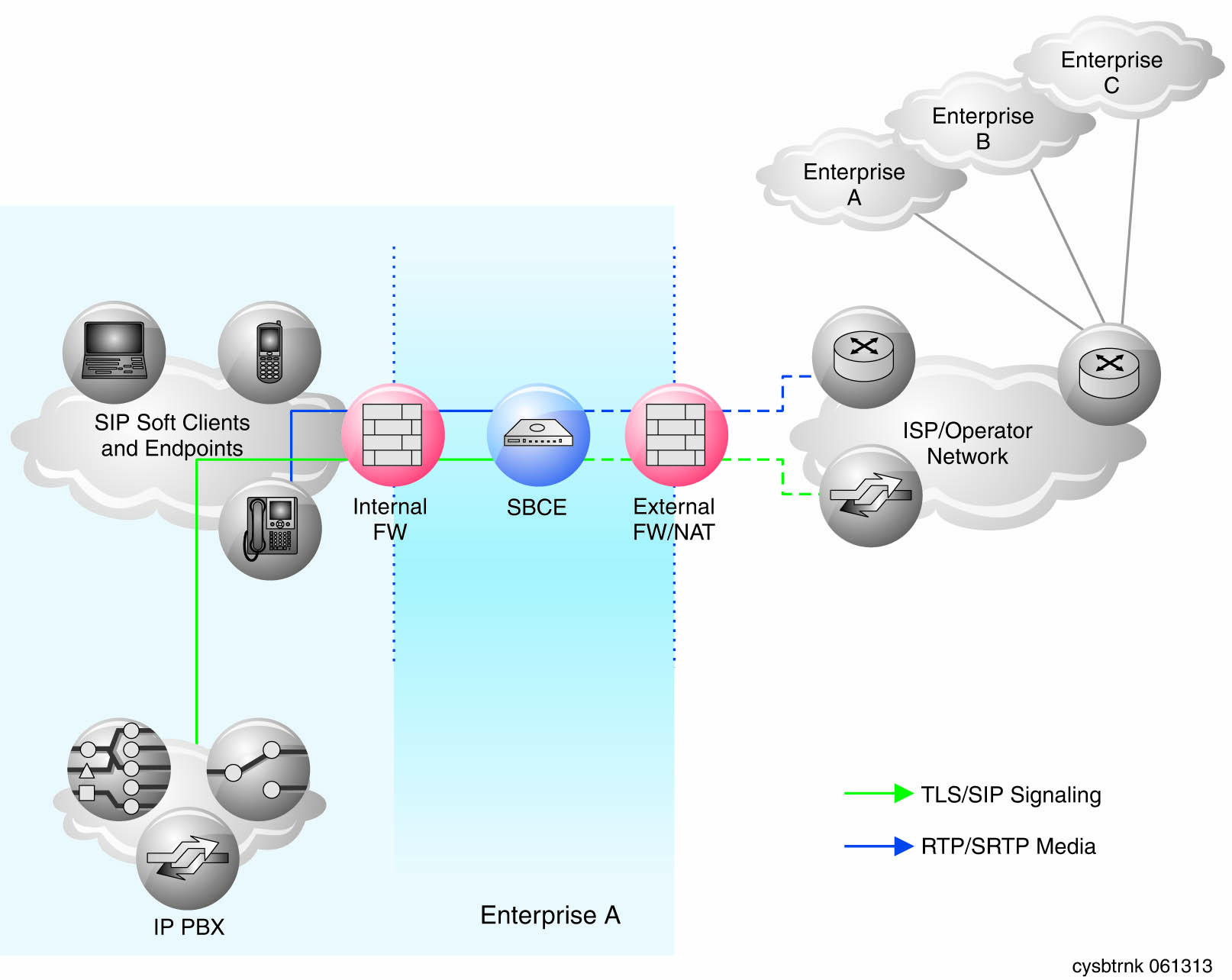
Because the Avaya SBC is deployed in the enterprise DMZ as a trusted host, all SIP signaling traffic destined for the enterprise is received by the external firewall and sent to the Avaya SBC for processing.
If the signaling traffic is encrypted, the Avaya SBC decrypts all TLS encrypted traffic and looks for anomalous behavior before forwarding the packets through the internal firewall to the appropriate IP PBX in the enterprise core to establish the requested call session.
When a valid call session has been set up, Real-Time Transport Protocol (RTP) or Secure Real-Time Transport Protocol (SRTP) media packets are allowed to flow through the external firewall to the Avaya SBC in the DMZ. The SBC then looks for anomalous behavior in the media before passing the RTP/SRTP stream on to the intended endpoint.