

In this scenario, User A calls User B. User B does not answer and the call is transferred to a centralized Avaya Aura® Messaging or Avaya Modular Messaging voice mail system. The following image shows the call media flow for a call from a centralized user to another centralized user with coverage to voice mail.
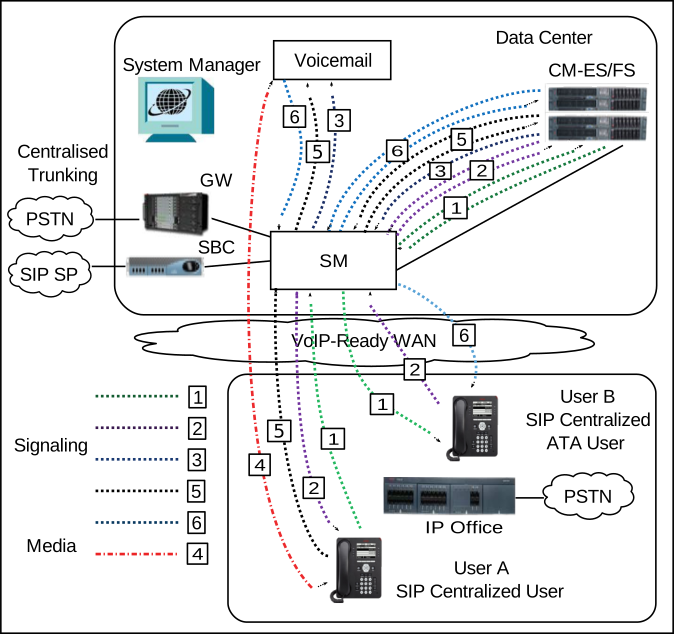
Figure: Centralized user A call to centralized user B with coverage to voice mail
The following table describes the call signaling flow in more detail.
Call signaling flow description for call from a centralized user to another centralized user with coverage to voice mail
Call scenario
Description of call signalling flow
SIP centralized user A dials SIP centralized user B
User at station B does not answer the call.
Call is forwarded to an Avaya Aura® Messaging or Avaya Modular Messaging centralized voice mail system.
User A leaves a voice mail message for user B.
User A hangs up after leaving the message.
Message Waiting Indicator lights up on user B’s phone to indicate that a new voice message is waiting.
User A SIP Invite Session ManagerCommunication ManagerSession Manager user B.
Ringing user BSession ManagerCommunication ManagerSession Manager user A.
A CANCEL message is sent for the original invite and a new invite is sent from Communication ManagerSession Manager centralized Avaya Aura® Messaging or Avaya Modular Messaging voice mail system.
RTP media is set up between user A, theCommunication Manager gateway, and the voice mail system.
After a series of invites, RTP is set up between User A and the voice mail system.
BYE is sent from user A Session ManagerCommunication ManagerSession Manager voice mail.
NOTIFY is sent from voice mail Session ManagerCommunication Manager PUBLISH to Session Manager NOTIFY user B with Message Waiting Indication status.