

AVAYA DOCUMENTATION CENTER
Find answers to your technical questions and learn how to use our products
Administering Network Connectivity on Avaya Aura® Communication Manager
Network regions
A network region is a group of IP endpoints that share common characteristics and common resources. Every IP endpoint on the Communication Manager system belongs to a network region. You can differentiate between the network regions either by the resources assigned or the geographical location or both.
You can create different network regions when a group of endpoints:
Require a different codec set based on bandwidth allocation or a different encryption algorithm than another group.
Gain access to specific PROCR, gateways, or other IP resources.
Require a different UDP port range or QoS parameters than another group.
Report to a different VoIP Monitoring Manager server than another group.
Require a different codec set based on bandwidth requirement or encryption algorithm for calls within the group than calls between separate endpoint groups.
The concept of locations is also similar to network regions. Use the location parameter to:
Identify distinct geographic locations, primarily for call routing purposes.
Ensure that calls pass through proper trunks based on the origin and destination of each call.
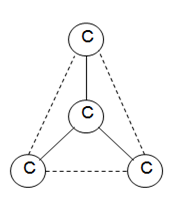
Communication Manager supports 2000 locations and network regions. You can now configure network regions as core network regions and stub network regions. You can configure network regions from 1 to 250 as core network regions or stub network regions. Network regions 251 to 2000 are stub network regions. A core network region is the traditional network region and can have multiple direct links with other network regions. For a diagrammatic representation of core network regions, see Figure : 1. The solid lines in the diagram indicate a direct communication path between two core network regions. The dotted lines indicate an indirect logical communication path between two core network regions.
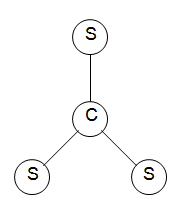
A stub network region must have a single defined pathway to only one core network region. For a diagrammatic representation of core network regions and stub network regions, see Figure : 2.
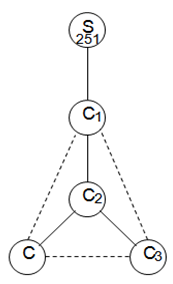
Stub network regions communicate with other network regions using the defined communication pathways of the core network regions. For example, a scenario where stub network region 251 directly communicates with core network region 1. If stub network region 251 wants to send data to core network region 3, then stub network region 251 first sends data to core network region 1. From core network region 1, Communication Manager uses the predefined communication pathway of core network region 1 to reach core network region 3. For a diagrammatic representation of the communication pathway, see Figure : 3.
The benefit of having a stub network region is that you do not have to configure multiple communication pathways to different network regions. When you add a stub network region, administer the communication path only to the core network region to which the stub network region connects.