AVAYA DOCUMENTATION CENTER
Find answers to your technical questions and learn how to use our products
Avaya Context Store Snap-in Reference
Context Store architecture overview
Avaya Context Store Snap-in provides a centralized data cache to the applications in a contact center. Using a distributed cache, Context Store offers a scalable, reliable, and fault-tolerant system to store context information. Context Store also provides services for making changes to the context information. You must deploy Context Store as a service on the applicable release of Avaya Breeze® platform. For more information on a supported line-up, see Avaya Context Store Snap-in Release Notes. A high availability (HA) deployment requires an Avaya Breeze® platform cluster containing a minimum of two Avaya Breeze® platform nodes.
Context Store offers the following functionality:
A standard RESTful Web Service API for third-party components to set and get context information.
Storage of context information using multiple key-value data.
Storage of context information using external identifiers, such as the UCID generated by Session Border Controllers.
Scalable solution with high availability using a distributed cache.
Management and monitoring services through the integration of Avaya Breeze® platform.
Security through the integration of Avaya Breeze® platform.
Context Store offers the flexibility to be deployed on Avaya Breeze® platform nodes of varying sizes. You can deploy Context Store on a single node or on a cluster of up to five nodes.
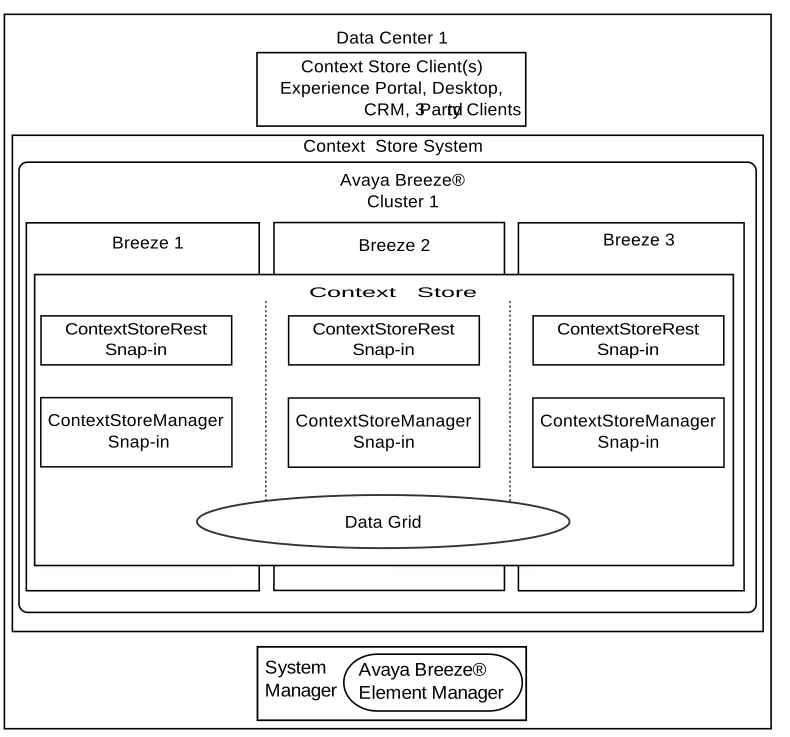
The following diagram shows the high-level architecture for the Context Store configuration of a cluster with three instances of Avaya Breeze® platform. This is a sample illustration. You can have a single-node cluster or cluster of up to five nodes.