

AVAYA DOCUMENTATION CENTER
Find answers to your technical questions and learn how to use our products
Avaya Context Store Snap-in Reference
Failover support
In a Context Store geo redundant setup, if the load balancer detects that a cluster is unavailable, the load balancer routes the incoming requests to the available cluster. The geo redundant architecture supports the following failover scenarios:
Both servers are unavailable: If the two Avaya Breeze® platform servers in a Context Store cluster are unavailable, the cluster IP address is also unavailable. The geo redundant load balancer detects the failure and routes all requests to the remaining active cluster.
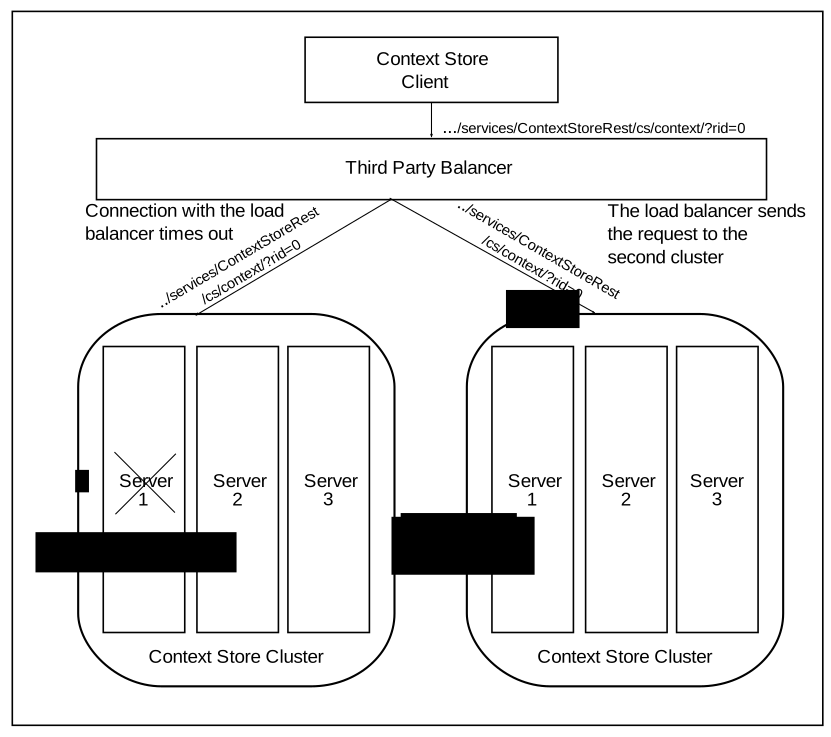
Either of the Avaya Breeze® platform servers and the other server of a Context Store cluster is unavailable, the remaining server detects the failure and returns a status code of 500. Upon receiving the failure information from the remaining server, the load balancer routes all requests to the other cluster in the geo redundant system.
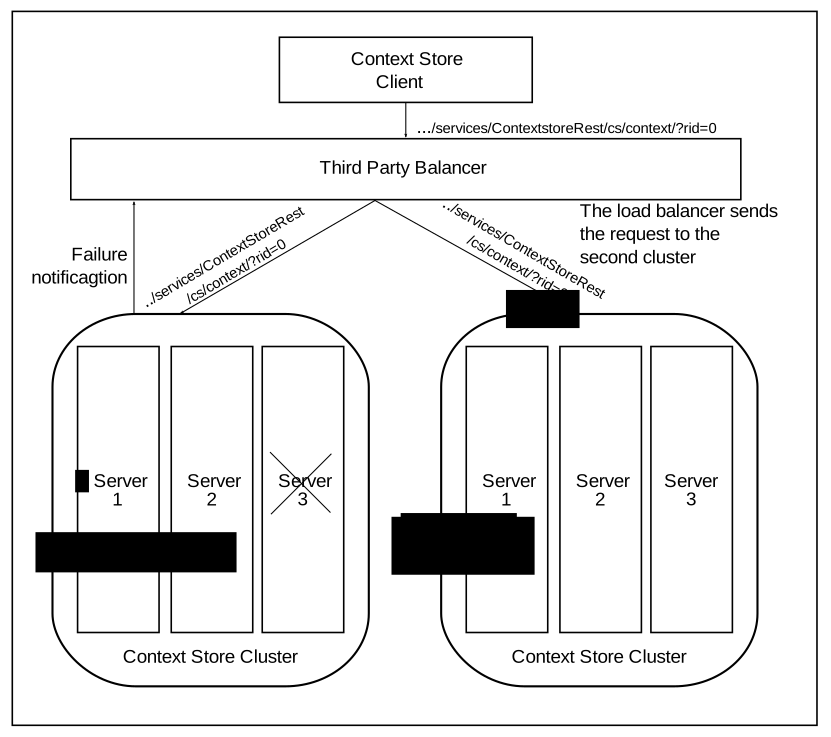
All three servers are unavailable: If all three Avaya Breeze® platform servers in a Context Store cluster are unavailable, the geo redundant load balancer routes all requests to the remaining Context Store cluster in the geo redundant system.
For the reference implementation, the Nginx load balancer running on the Geo cluster will automatically detect if a Context Store cluster is back in service. There are no manual steps required for the Load Balancer to reintroduce a Context Store cluster back into receiving requests.