

AVAYA DOCUMENTATION CENTER
Find answers to your technical questions and learn how to use our products
Implementing Avaya Proactive Outreach Manager
Deployment
To enable Geo-Redundancy, you need a minimum of two data centers where one data center is active and the other is standby. When the active data center fails, the standby data center can be made active and normal operations continue with minimal down-time and impact.
The following diagram is an example of two data centers configured for Geo-Redundancy using the architecture discussed:
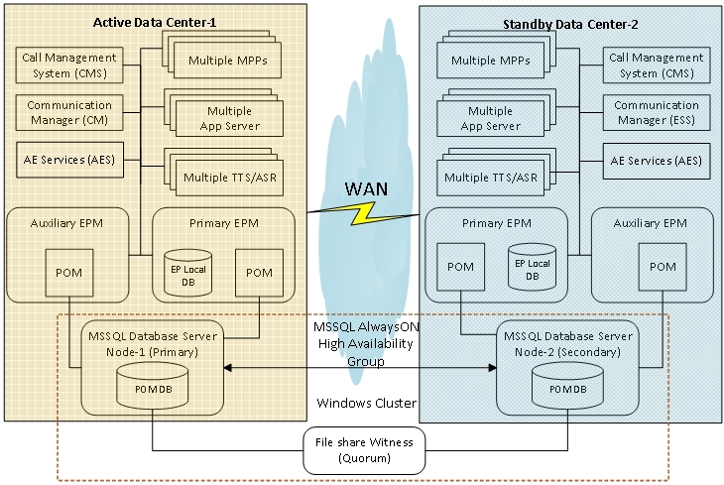
The components shown in the diagram are for illustration purpose only. The actual data center can have many more components.
Campaigns run on the active Data Center-1. The POM server stores the data related to campaigns in the database. The MSSQL Database AlwaysOn feature replicates all the data from the active Data Center-1 to all the nodes of the MSSQL Database Server in Data Center-2. If a customer deploys the MSSQL Database Node-3 instead of a File Share Witness, the data is also replicated to Node-3. A minimum of two database nodes are required. One in each data center. Additional nodes or the File Share Witness shown in the diagram are optional because the database needs to be configured for manual failover across the two sites.
When the active Data Center-1 fails, as shown in the diagram below, the standby Data Center-2 becomes active. POM services on the newly active Data Center-2 resume the services according to the data available in the new Primary Database node.
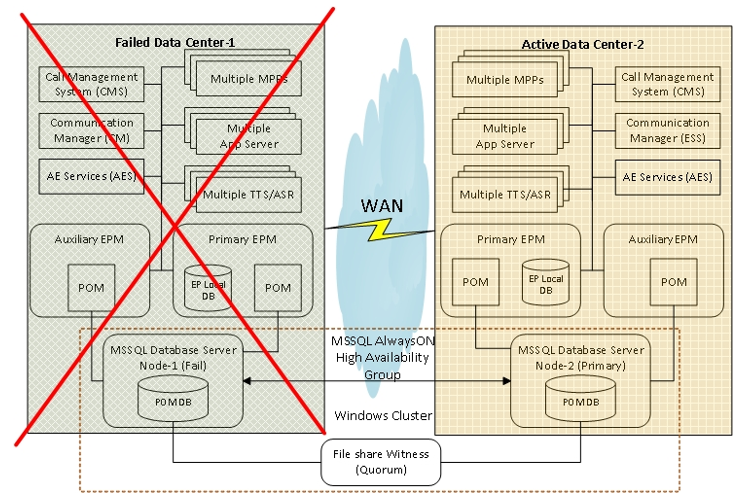
Node-2 deployed on Data Center-2 is changed to become the Primary when Data Center-1 fails. The change of role of the database from secondary to primary requires manual intervention because the MSSQL database is configured for manual failover. The failover of POM services from Data Center-1 to Data Center-2 is a manual process.