AVAYA DOCUMENTATION CENTER
Find answers to your technical questions and learn how to use our products
Avaya GIS Customer Documentation Standards
Where substeps are useful
Substeps are useful in the following scenarios:
For a high-level procedure involving tasks on several different product or solution elements.
Typically, you would cover this information in a workflow. However, substeps can be useful if you want to present this information in a high-level task.
When the customer must use several different interfaces or log in to different servers to complete the task.
When presenting different options, each of which require slightly different steps.
To distinguish between two types of activities in a single task and interface.
Only use substeps when creating new topics for each activity is overkill and the differences in the options are marginal to the overall intent of the task.
Examples
The following are examples of a few scenarios where substeps are beneficial.
Two different activities in a single task
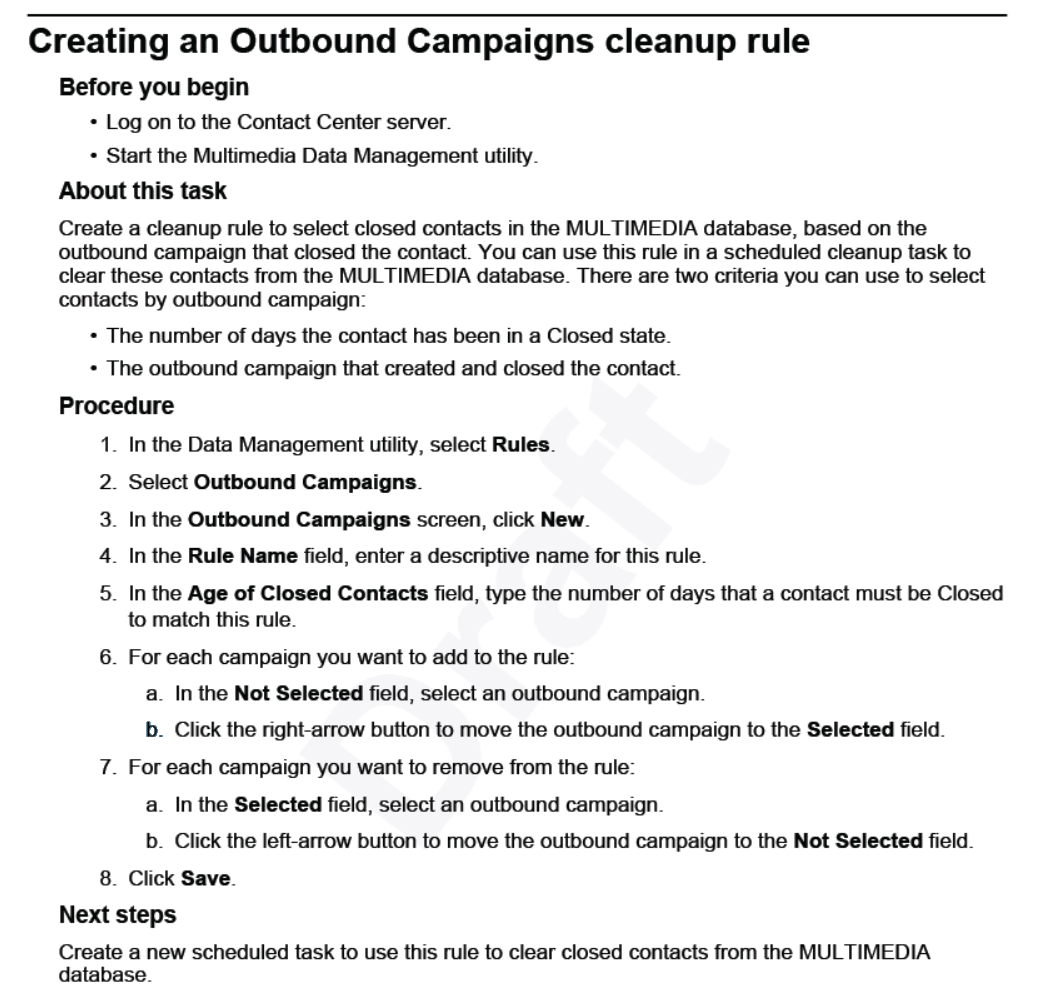
In this example, the procedure is about creating cleanup rules with one or more campaigns. When adding a new campaign, the customer could make a mistake and might need to know how to remove the campaign. Therefore, it is appropriate to cover this information in a single task topic:
Substeps for presenting different options
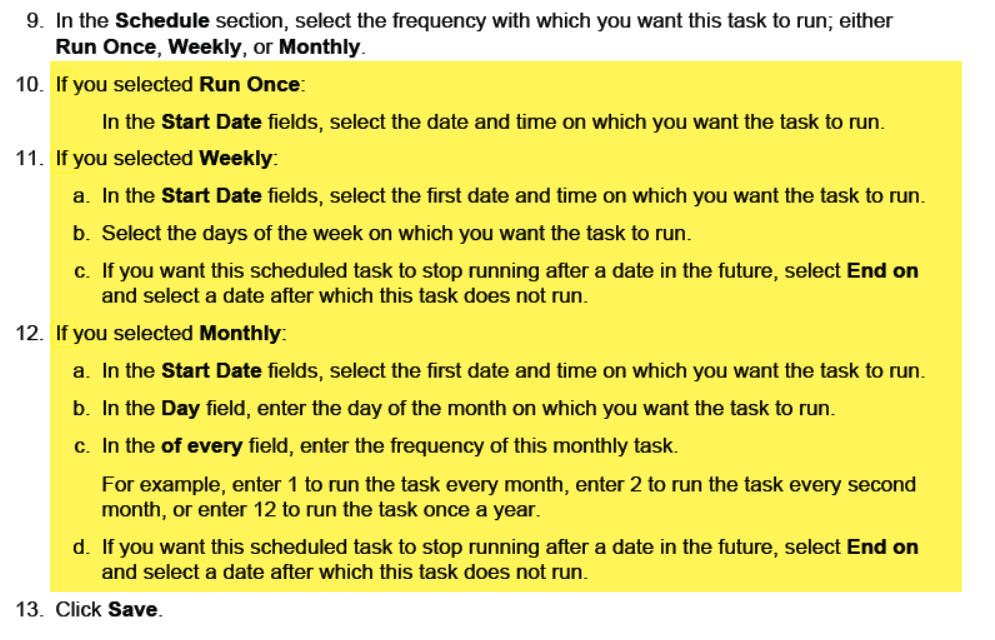
This example shows how to use substeps to present different options. In this scenario, a separate topic would be overkill, so the information must be presented in a single topic.