

AVAYA DOCUMENTATION CENTER
Find answers to your technical questions and learn how to use our products
Avaya Aura Communication Manager Feature Description and Implementation
Detailed description of Network Regions
Communication Manager now supports a maximum of 2000 network regions and locations. With the increase in the number of network regions, organizations can expand businesses to various locations globally. Organizations can also efficiently manage bandwidth by allocating the required amount of bandwidth to a particular network region. To support an increase of up to 2000 network regions, you can now configure network regions as core network regions and stub network regions. You can configure network regions 1 to 250 as core network regions or stub network regions. Network regions 251 to 2000 are stub network regions by default.
A core network region is the traditional network region and can have multiple direct links with other network regions. For information on core network regions, see Figure 1. Core network regions. The solid lines in the diagram indicate a direct connection between two core network regions and the dotted lines indicate an indirect logical communication path from one core network region to other core network regions. A stub network region must have a single defined pathway to only one core network region. For information on core network regions with stub network regions, see Figure 2. Core network regions with stub network regions.
Figure 1: Core network regions

Figure 2: Core network regions with stub network regions

Stub network regions communicate with other network regions by using the defined communication pathways of the core network regions that the stub network regions are connected to. For example, if stub network region 251 is directly connected to core network region 1 and stub network region 251 needs to send data or route calls to core network region 3, then stub network region 251 first sends data to core network region 1 and from core network region 1, Communication Manager uses the predefined communication pathway of core network region 1 to reach core network region 3. For more information on communication path from stub network regions to core network regions, see Figure 3. Communication path from a stub network region to a core network region.
Figure 3: Communication path from a stub network region to a core network region
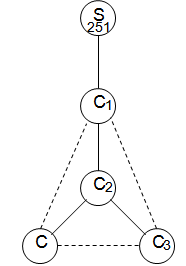
The benefit of having a stub network region is that you do not have to configure multiple communication pathways to different network regions. In previous releases of Communication Manager, when you add a network region, you must administer the communication path to all the other network regions with the associated intervening network regions. With the introduction of stub networks, when you add a stub network region, you have to administer the communication path only to the core network region that the stub network region connects to. You must assign Communication Manager hardware such as media processors, C-LANs, and cabinets to network regions 1 to 250 regardless of whether the network region is a core network region or a stub network region.
You can assign media gateways to network regions above 250.