

AVAYA DOCUMENTATION CENTER
Find answers to your technical questions and learn how to use our products
Administering Avaya IP Office with Web Manager
Dial By Name
This action allows callers to dial the name that want and then hear a list of matches from which they can make a selection. For example, To select from a list of names, press 1
.
Callers selecting this option are asked to dial the name of the user they require and then press #. They then hear a list of possible matches from which they can make a selection. The list uses the recording mailbox name prompts of matched users.
The name matching uses the auto-attendant’s Name Match Order setting to either match against first or last names.
The name used for matching is the user’s Full Name if set, otherwise their Name is used.
Users are excluded from matching if they:
Are marked as Ex Directory in their user settings.
Do not have a recorded mailbox name prompt. Normally user’s are asked to record a name when they first access their mailbox. See Recording User Name Prompts.
Dial By Name assumes that a standard ITU lettered dialing pad is being used.
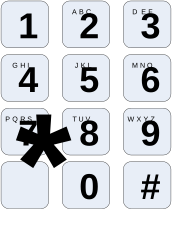
How Dial By Name works
The caller is prompted to dial the name they require and then press #.
For example: Dialing 527 matches names starting with JAS (for example "Jason") and KAR (for example "Karl").
Callers can also press *# to exit without making a selection.
Depending on the number of matches found:
If no matches are found, the caller is given the option to retry.
If 10 or less matches are found, the matching mailbox name greetings are played as part of a list. For example,
”Press 1 for …, Press 2 for …, Press 3 for …”
.If more then 10 matches are found, the caller is prompted to either press # to hear the first 10 matches or to dial more characters to reduce the number of matches. If they select to play the list, after each set of 10 matches they can either make a selection or follow the prompts for other options.
Action Settings
Key |
Description |
|---|---|
Speech Recognition Keywords |
This option is only available on subscription mode systems and when Speech AI is set to a specific language. It allows the action to be triggered by speech recognition of keywords.
|
Consent Directive |
When a caller selects a particular action, the actions Consent Directive value is included in the system logs. These options allow you record whether the caller has indicated their consent to some action, for example call recording. See Auto-Attendant Consent Example.
|